Australian south sea pearls

English 简体 РУССКИЙ

The finest pearls
in the world

For centuries, Australian South Sea pearls have been prized as the most desirable and most valuable of all pearls. Renowned for their 'orient', it is this combination of transparent lustre and unique play of colours that makes these pearls so unique.


Pinctada Maxima

As a general rule, the most beautiful pearls come from the molluscs with the most beautiful shells.

The Australian South Sea pearl oyster

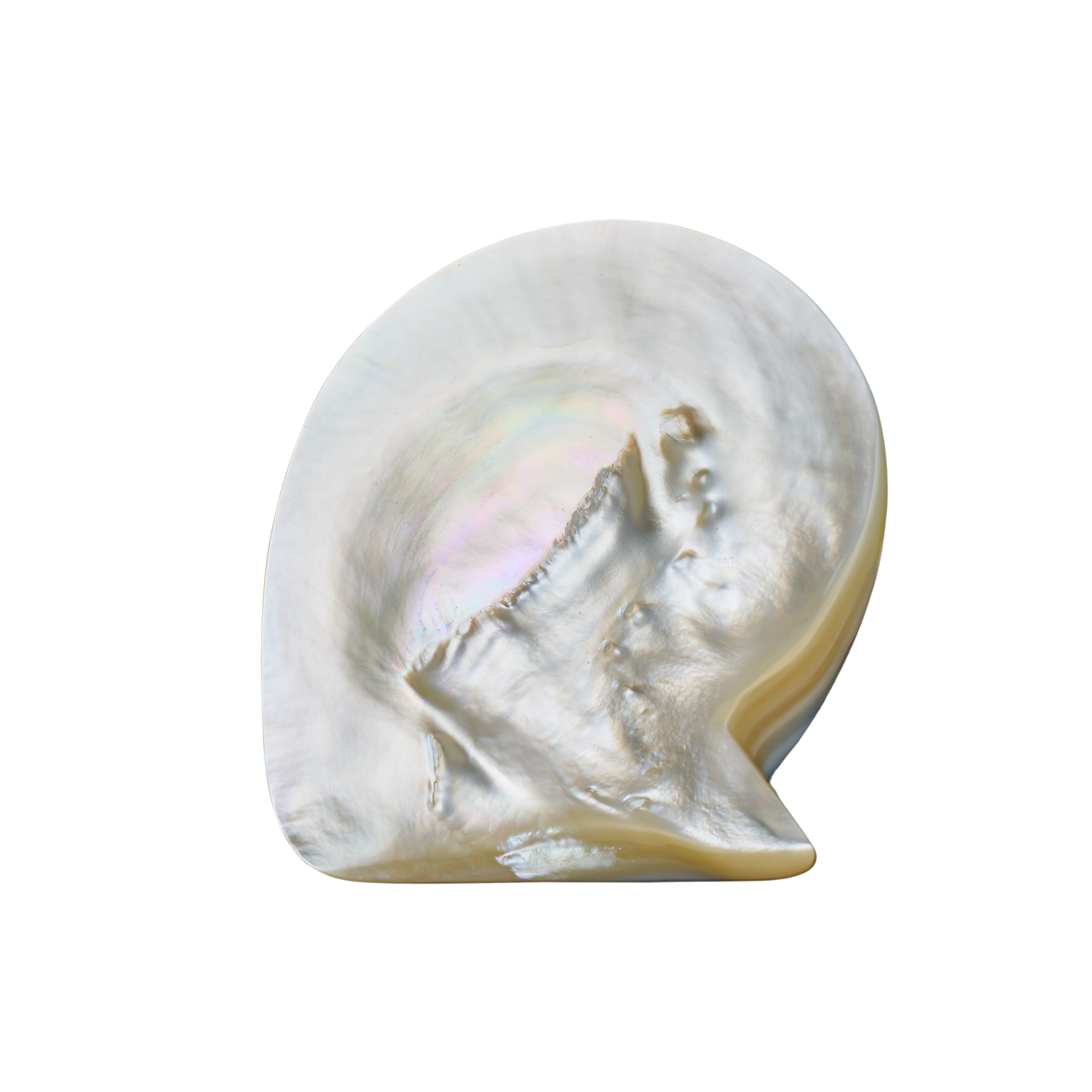
The Australian South Sea pearl oyster (Pinctada maxima) is the largest and rarest of all pearl oysters, and produces the finest and most beautiful pearl nacre of any mollusc.

Divers collect the wild oysters by hand in the remote waters off north-west Australia. They are then taken to pearl farms, where they are nurtured in the hope that they will produce a gem quality pearl. Not every oyster will produce a pearl, and apart from rare exceptions, most will produce only one pearl at a time.

The shell itself is highly valued for its lustrous mother-of-pearl that is used for jewellery, fine quality buttons, and inlay.

Explore key pearl types

Qualities

Australia’s oceanic conditions are acknowledged as the source of the world’s finest and largest pearls.

Today, Australian South Sea pearls with high transparency and colour overtone (known as 'orient') are produced exclusively in Australia. This unique play of surface colours occurs naturally only in pearls with fine quality nacre. Pearls from other regions can be subjected to chemical and heat treatment to replicate the effect.

Learn more

Location

Wild Pinctada maxima oysters are found in commercial quantities in an isolated region of north-west Australia. These oyster beds are protected by strict hand collection quotas enforced by government agencies.

Pinctada maxima oysters are rare and solitary creatures that thrive only in waters rich with microscopic plankton. They are particularly sensitive to changes in environmental conditions, making them extremely difficult to cultivate.

Discover more

Mother of Pearl

Mother of Pearl is composed of aragonite crystals and other organic materials.

It is a natural product extracted from the Western Australian Silverlip Pearl Oyster (Pinctada maxima) shell.


Mother of pearl is used in a number of global luxury good applications including fine jewellery, watch dials and luxury buttons.


Once harvested, the P. maxima shell undergoes processing to extract the mother of pearl. This process is conducted at two processing facilities.

Unique Characteristics

The Australian South Sea pearl is unrivalled in rarity, quality, nacre thickness, natural lustre, size, and value.

It is the combination of these features that make Australian South Sea pearls so unique.

Australian South Sea pearls are known for their extraordinary beauty - difficult to define but immediately apparent. Today, Australia produces the majority of South Sea pearls with the natural transparency and colour overtone known as 'orient'. The terms 'lustre' and 'orient' describe the appearance of light reflecting from deep within the perfect layers of pearl nacre. Consisting of thousands of layers, the quality and thickness of the nacre of fine quality Australian South Sea pearls gives them a natural beauty that will last for generations.

Due to their rarity, natural pearls often command higher prices than cultured pearls, but the factors used to assess quality and value are the same for both.

Every pearl should be sorted and graded according to “The Five Virtues" – Lustre, Complexion, Shape, Colour and Size. When selecting pearls however, it must also be remembered that a pearl's beauty - and ultimately its value - is in the eye of the
beholder.

Discover the Five Virtues
Background Image

THE FIVE VIRTUES

Select Virtue
Slide to Change

Discover the time honoured methods traditionally used to assess the value of pearls through our interactive Five Virtues tool.

Pearl Lustre
  • Poor A dim reflection and chalky appearance indicates thin or poor quality nacre
  • Fair A cloudy appearance with hazy or blurred reflection indicates coarse nacre
  • Good Bright reflections with a soft satin smooth appearance indicates fine quality nacre
  • Very Good An alluring brilliance from a sharp inner glow indicates superior quality nacre
  • Excellent A distinct luminosity and mirror like reflection indicates rare gem quality pearl nacre

1 / Lustre

The magic of a pearl lies in its lustre. Though difficult to illustrate, lustre is the most important characteristic of pearl quality that is instantly recognisable.

Read more

Pearl Complexion
  • Heavily spotted Many blemishes on the pearl's surface
  • Moderately spotted Moderate blemishes on the pearl's surface
  • Lightly spotted A few light blemishes on the pearl's surface
  • Clean A flawless pearl surface or one with minute blemishes that are barely visible

2 / Complexion

A pearl with a flawless surface is exceptionally rare. Pearl quality is influenced by the number and size of imperfections and their degree of visibility. Clearly noticeable imperfections will significantly compromise a pearl's allure and value

Pearl Shape
  • Drop
  • Oval
  • Round
  • Button
  • Baroque

3 / Shape

A pearl's shape does not affect its quality; the demand for a particular shape, however, does have a bearing on value. Pearls of perfect symmetry such as round and tear-drop shapes are particularly rare and desirable. Ultimately, beauty lies in the eye of the beholder and selection of shape is a personal choice.

Shape Features

  • shape-circle-thumb Circle

  • shape-keshi-thumb Keshi

Pearls Colour
  • Gold
  • Champagne
  • Cream
  • White
  • White
    Pink
  • Silver
  • Silver
    Pink

4 / Colour

The wide array of natural colours of Australian South Sea pearls typically mirror the overtones of the pearl shell. Colour, like shape, is a very personal choice and the popularity of a particular hue influences a pearl's value. Australian South Sea pearls are typically white, silver, cream or gold. White with pink overtones is the most prized colour.

Pearl Size
5mm
  • Small
  • Medium
  • Large

5 / Size

Australian South Sea pearls have very thick pearl nacre and are the largest of all pearls, typically ranging from 11mm to 16mm. Larger sizes exceeding 20mm are occasionally found and such pearls are highly prized. Larger pearls are typically more valuable due to their greater rarity but size is only one of the 5 Virtues used to consider a pearl's value. Pearls are measured in millimetres by width.

Note: Illustrations are approximately to scale

Environment

Australian South Sea pearls are cultured through a respectful partnership with nature. The industry operates under the Western Australia’s Pearling Act 1990 and Northern Territory’s Fisheries Act 1988, which ensures minimal disruption to the natural environment.

Pinctada maxima pearl farms range from Gove in the Northern Territory to Exmouth in Western Australia.

Pinctada maxima oysters are obtained through a combination of wild pearl oysters hand collected by divers and hatchery production. The majority of Australian South Sea pearl production is derived from wild Pinctada maxima oysters collected by divers followed by hatchery produced shells. Both methods are regulated through a system of licenses and quota. While the hand collection of wild Pinctada maxima oysters by divers is logistically complex, it is a sustainable collection method.

These locations provide optimal conditions for the Pinctada maxima to produce the world’s finest pearls. Many of the farms are located in or adjacent to national parks, marine parks and Aboriginal lands.

The pearling industry regularly conducts ecological risk assessments of the Pinctada maxima oyster to assess the impact of pearling operations and activities on the environment in which it operates. The assessment, conducted by the Western Australia Department of Primary Industries and Regional Development, conforms to AS/NZS ISO 31000 Risk Management Standard. Results of the latest assessment conducted in 2023, did not yield any high risks, with the majority of metrics determined to be low or negligible risk. This assessment is valid until 2027 when the next ecological risk assessment will take place.


Pearl farms are regulated under the Western Australia’s Pearling Act 1990 and Northern Territory’s Fisheries Act 1988. This is implemented through a combination of licences and a quota system that sets out the maximum number of Pinctada maxima oysters that can be farmed each year. Due to managed regulation, Pinctada maxima oysters have followed relatively stable long-term trends.

The combination of stable long-term trends with minimal ecological risks, has supported Australia’s Pearling Industry being re-certified as sustainable by the Marine Stewardship Council in 2023 with the following Certificate Number: MSC-F-30005. The Marine Stewardship Council is an international non-profit organisation that certifies under their Fisheries Standard.

This certification is valid from 2023 to 2028 and was independently evaluated by bio.inspecta and accredited by ASI under the ASI-ACC-041 voluntary sustainability standard.

Paspaley Pearl Meat

A rare delicacy sourced from the pristine waters off Northern Australia, Pearl Meat is the adductor muscle of the Pinctada maxima oyster – the same species that produces Paspaley’s rare Australian South Sea pearls.

Pinctada maxima Pearl Meat is sourced from oysters farmed in remote Northern Australian marine waters, ranging from Gove in the Northern Territory to Exmouth in Western Australia.

At the end of the Pinctada maxima oyster’s pearl producing life, the Pearl Meat is simply extracted from the oyster, rinsed in saltwater and frozen. Pearl Meat has been prized as a delicacy in Asia for centuries, and highly regarded for its medicinal properties. It is low in salt, high in protein and contains no trans-fats. It also contains vitamins A and E, as well as calcium, iron, selenium, zinc and iodine.

In recent years, Pearl Meat has been adopted by some of the world’s leading western and Asian chefs. With only six to eight tons sourced from Northern Australia’s remote marine waters annually, it is one of the world’s rarest seafood delicacies.

The Marine Stewardship Council re-certified the Pinctada maxima Pearl Meat in 2023 as sustainable, with Certificate Number: MSC-F-30005. This certification is valid until 2028. Pearl Meat also holds the MSC Chain of Custody certification, with Certificate Number: MSC-C-56167, providing assurance that all products sold with the blue MSC label have been certified as sustainable. This certification is valid to 2026.

Both certification processes were independently evaluated by bio.inspecta and accredited by ASI under the ASI-ACC-041 voluntary sustainability standard.

The Pinctada maxima Pearl Meat also receives Food Safety Management certification under the following accreditation: Food Safety management ISO 22000; Registration Number AU1420-FS, with certification valid to 2028. This is independently certified by TQCS International (Group) Pty Ltd.

Sign up for
general site updates